The Competition for Creators
Creators hold more power than ever—and companies are taking stock. Here, how TikTok, Meta, and more plan to woo these budding entrepreneurs to their platforms.

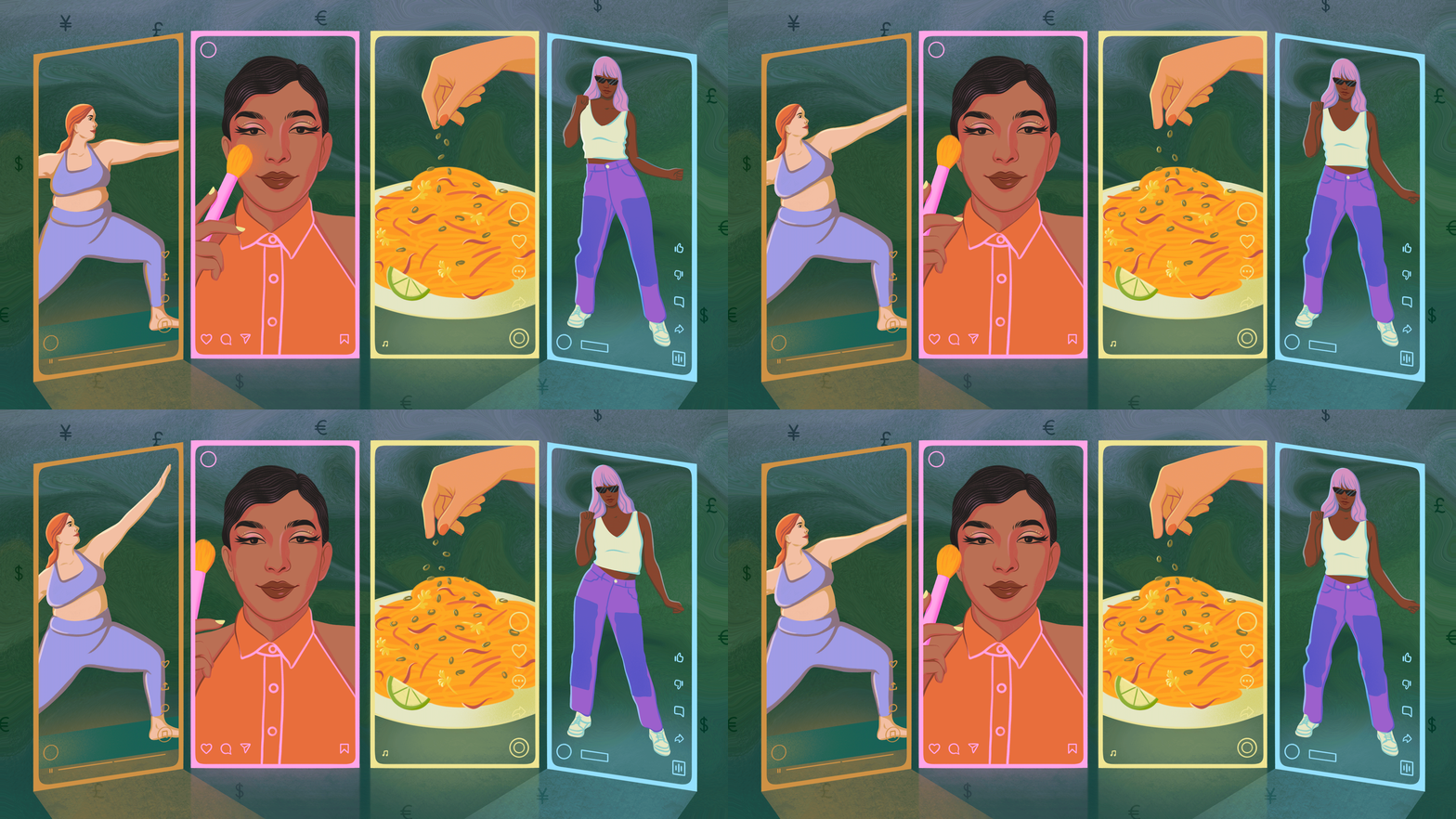
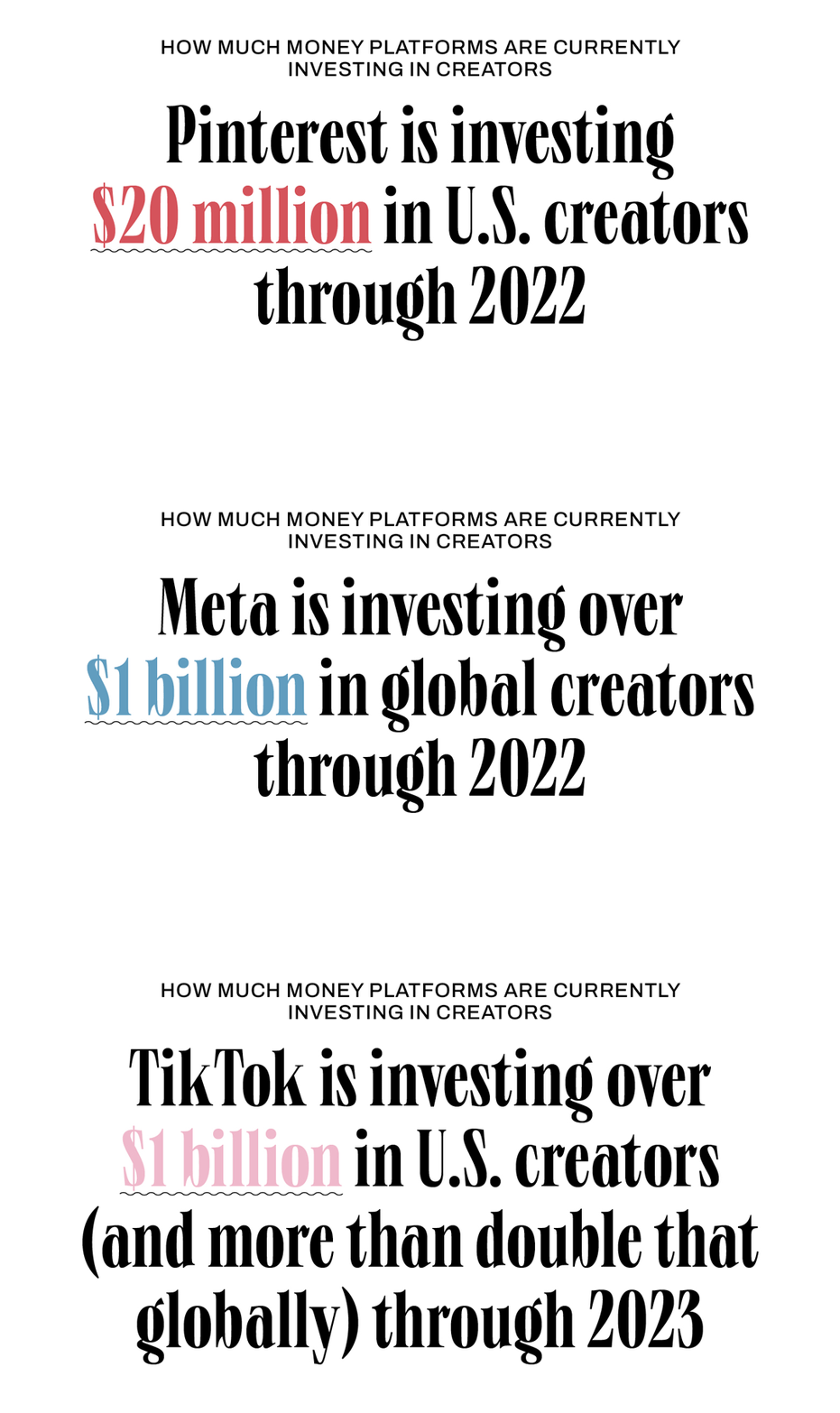
In a world where YouTube paid more than $30 billion to creators, artists, and media companies over three years, Meta (formerly known as Facebook) plans to invest over $1 billion in creators through 2022, and TikTok aims to grow its Creator Fund to more than $1 billion in the U.S. alone through 2023, companies that want to attract and sustain creators on their platforms are left with one choice: go big or go bigger.
“We're in a creator arms race where every platform regards itself as being in competition with all of the other platforms for creator attention,” says Li Jin, co-founder and general partner of Variant Fund, who has been dubbed “the investor guru for online creators.” “If these platforms want to maintain usage and grow in their user bases, they need to hold on to that creator attention and creator investment in that platform.”
Gone are the days when creators—once widely known as influencers—were a small segment of the online community. Today, anyone can be a creator (around 50 million people worldwide consider themselves creators within a creator economy that’s worth an estimated $100 billion); some are just making six figures from it. This growth in independent content creators has propelled platforms to reimagine how they interact with their users, and for creators to demand more from platforms, like improved monetization tools and equitable algorithms. As a venture capitalist who’s focused on cryptocurrency and Web3, Jin believes creators will eventually leverage crypto-based tools like NFTs and social tokens in order to find new business models and engage with fans in ways that weren’t possible before.
“The ownership economy is the future of a healthy creator economy,” says Jin. “Without ownership, the creator economy is simply the gig economy.”
Marie Claire spoke to executives who lead creator operations at some of the most popular online platforms—TikTok, YouTube, Facebook, Instagram, Snapchat, and Pinterest—to find out how they plan to win over creators in 2022, why they think their respective platforms set them apart from the rest, and what they’re bringing to the table for the next generation of creators.
Facebook Instagram
Meta VP of Global Creator Partnerships Sibyl Goldman focuses on creators’ storytelling, community building, and businesses for all things Meta, which includes Facebook and Instagram. “To me, any creator is someone who's influencing my perspective on something,” explains Goldman. “Whether that's what to watch, what to cook, what to wear.”
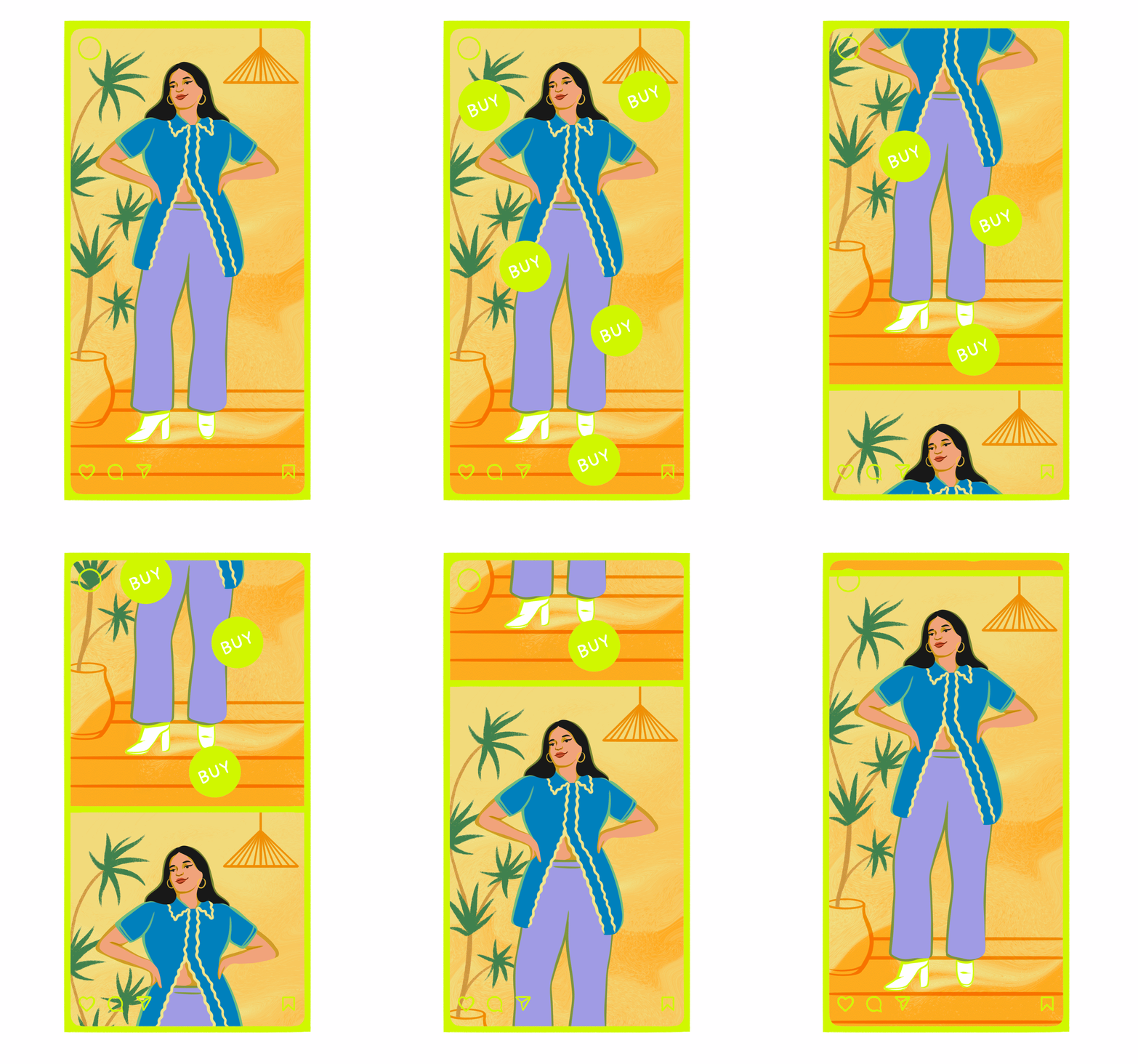
The main ways creators can make money on Facebook and Instagram are through video monetization, fan subscriptionbased activities, branded content, bonuses, and commerce. Creators can learn more about how to get started on Meta’s platforms here.
Marie Claire: Mark Zuckerberg said last June that Facebook (now known as Meta) won't take a cut from creators until 2023; a month later the company announced that by the end of 2022 it plans to invest more than $1 billion in programs that give creators new ways to earn money. Can you share more on these new monetization tools?
Sibyl Goldman: We're continuing with the incentives, and we're rolling out more fan subscriptionbased models so that people can focus on engaging with the creators they care the most about and funding more content that they love. We're doing more and more product shop drops on the Instagram side. Commerce is going to be absolutely huge for us. Taking people who have that followership and turning that into recommendations, which then become commerce opportunities for the creators, is just incredible.
MC: It's no secret Facebook wants to attract a younger audience. Why should these creators come to Facebook versus another platform?
SG: That's the driving force of what I think about from a work perspective when I wake up in the morning. How can we be the most compelling? And when I say “we,” I think of that as Meta, and Facebook being a really strong piece of the puzzle. The answer is because we have such a wide portfolio of tools for any given creator. So, if you want to build a monetized video presence you can do that. If you want to build yourself out as a brand with commerce as the main pillar—whether that's lip gloss, T-shirts, sneakers, whatever—we can do that with you across Facebook and Instagram.
If you want to do those things plus you want to start to move into the future spaces—which today are around AR, around VR, [and] we're getting into hardware—we can offer a bit of each of those things to creators. They can build their business and their community today, but they can also start aggressively moving into the things that are going to be the future.
MC: Meta’s algorithms have been a top concern for creators of color. How is Meta evolving to amplify the voices of independent creators of color and make sure they have the tools and support they need to come to its platforms to share their content?
SG: We rolled out a really exciting program called We The Culture [in February 2021]. This focuses on two things: One, on making sure that we are amplifying the content from our creators of color and investing in them. And secondly, that we create very specific feedback loops for our creators of color to give us not only feedback on the algorithm, but on a range of product issues and policy issues that now have a direct flow into our product and policy leaders.
MC: In this age of highly rampant misinformation and disinformation, how does Meta plan to monitor what creators are producing and limit misinformation and disinformation on its platforms?
SG: We have quite stringent policies in place around misinformation and reporting so that people can report content—whether it's inappropriate or inaccurate—to us. We enforce our content policies quite aggressively. Now, we're massive platforms. And there are things that need to be reported more than once to be taken down, but we take it hugely seriously. When you speak with creators, you generally hear oftentimes more concerns about something that was taken down than something that was left up. But we take all of the feedback from the creators on this and we'll just continue to tool and retool our policies to make sure that the platforms feel safe. That's the most important thing.
MC: What does the future look like for creators on Facebook and Instagram?
SG: It looks like a world that is straightforward, where they can easily flow across the family of apps with their content and their vision for their business, where they can have an easy dash[board] to understand their performance, and they can add a new tool or a new expansion of what they're doing quite easily. So it's like, hey, I want to try selling something. How would I do that? Oh, it's quite easy to do, add that into the mix. I want to have a paid online event where people are subscribing/paying to watch me perform or listen to me talk. All of those things exist today and bringing them a little bit closer together so that the creator can be efficient and spend their time primarily on content production and community building. Making sure that we are a source of relief from [creator burnout] by being as easy to work with as possible is going to be incredibly important.
“Our Pinterest creators are the doers, the designers, and the makers across our key categories that our pinners really are searching for—so, that's food, home, beauty, style, and wellness,” says Pinterest Global Head of Creator Marketing Colleen Stauffer. “They don't have to be famous. We believe anyone can inspire, as long as they're really just sharing their perspective. We say our creators major in expertise and minor in celebrity.”
The main ways creators can earn money on Pinterest are through Pinterest’s in-product monetization program called Creator Rewards (it’s currently in beta and will be open to all U.S. creators this year), brand partnerships, and product tagging with affiliate links. Creators can learn more about how to get started on Pinterest here.
Marie Claire: Pinterest is relatively new to the creator space. How has the platform evolved to benefit creators?
Colleen Stauffer: It's interesting because the platform's been around for 12 years and all of the content on the platform has always been from creators, but it's been a different type of creator until really the past year or two. It was always bloggers who drove traffic off of Pinterest. Now, we've really opened up the platform to welcome the creators that don't want a separate website, but they want to build a following [within the platform].
We've started to build products like Idea Pins that don't link out. That whole product is really to get people to follow them, to share their ideas, and to really connect with these creators on a more meaningful level. Within Idea Pins are Takes. That’s where someone would share back their version of what the creator has made. These creators are really building and getting feedback from their community. The creator always gets credit across Pinterest when the person uploads a Take to their Idea Pin, but you can see how it's really starting to form these communities around passion, around ideas, and getting people to come back and follow these creators again and again.
MC: How does Pinterest plan to attract creators in 2022?
CS: All different ways. The monetization was a big thing we heard from creators. So, the [$20 million] Creator Rewards program will continue to grow. We've always been known as a really positive platform, and we're so proud of that. We announced our Creator Code early in 2021, which is our set of guidelines that has creators commit to keeping Pinterest a safe and positive place. And then the meaningful engagement. That's going to be something that we're going to continue to expand and release new products around in 2022, so [creators] can just have more fun and more tools to build and engage their community.
MC: Pinterest has predominantly been used by white users. How is Pinterest ensuring creators of color have the tools and support they need to successfully utilize the platform?
CS: We released a [$500,000] creator fund last year and it’s really for underrepresented creators. What we're trying to do is make sure that we bring them in, we listen to them, we're empathetic, and we build programs for them with them. Pinterest and creation on Pinterest is new, so making sure that we're not just giving them money and saying, "Hey, go create on Pinterest," but truly spending the time with them one-on-one and making them successful. We also have really strong internal goals that 50 percent of our managed creators are from underrepresented groups, and 30 percent are Black creators.
MC: What does the future look like for creators on Pinterest?
CS: It’s inspiration to realization. Making sure that pinners and creators can not only be inspired on the platform, but can make that inspiration happen for whatever they want to buy, try, make, and do. For creators within that world, it's really for them to build a passionate community that's safe and inclusive, and then hopefully make a living, and turn their side hustle into a full-time job if they haven't yet. Making sure they feel like Pinterest is backing them and really building that community that they've been looking for and maybe haven't fulfilled on other platforms.
YouTube
YouTube Global Head of Top Creators Lori Scott manages the largest and most influential creators on the platform. Scott defines a YouTube creator as anyone who is making original video content. “We have over two million monetizing creators on our platform and we offer many different formats, so everyone creating live video-on-demand (VOD) or Shorts content is a creator at its core,” she explains. “We think of our ecosystem as artists, media companies, and creators, so we have teams that work with all of those parties.”
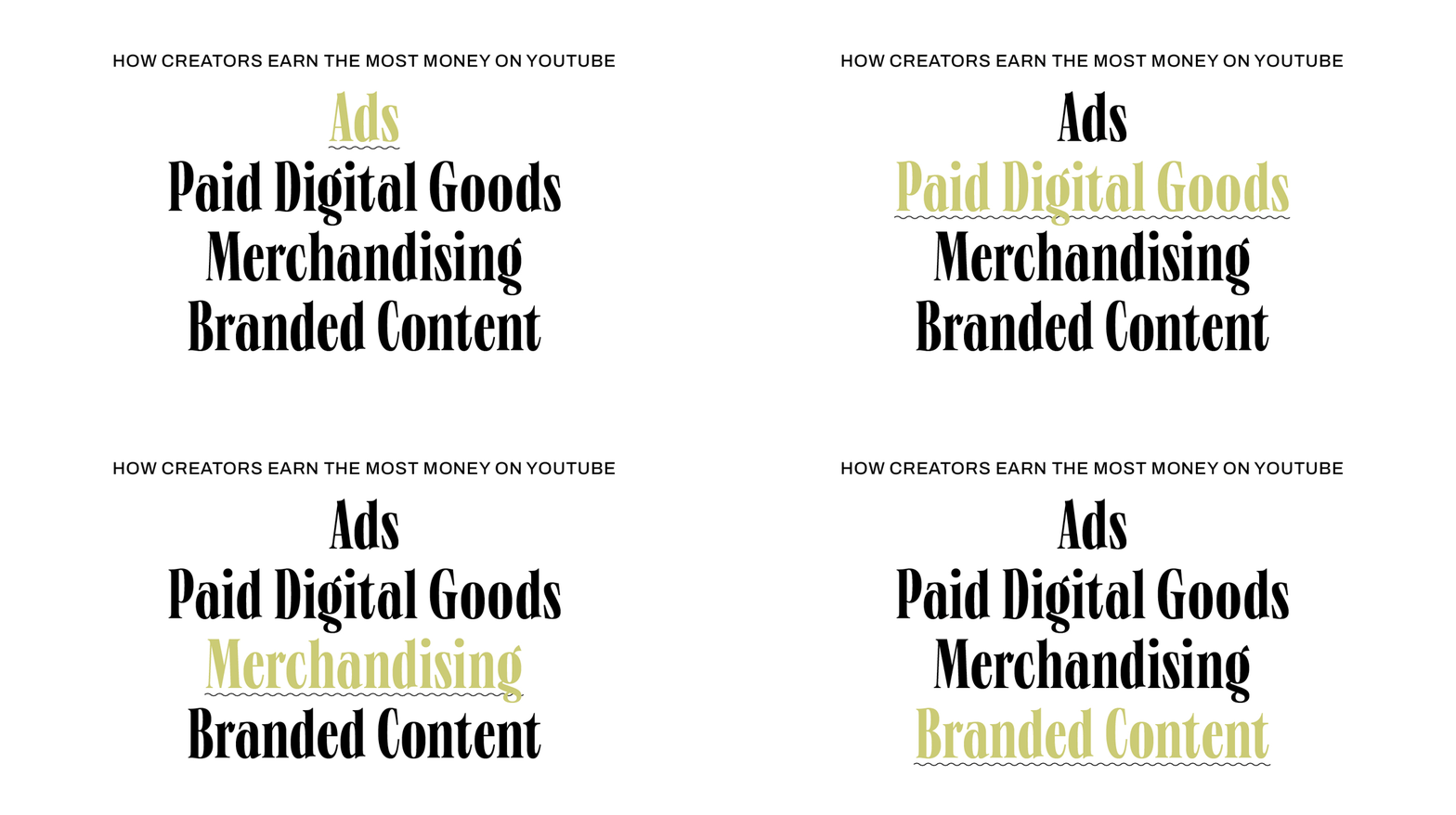
There are 10 ways creators can monetize their content on YouTube, including getting paid through YouTube’s $100 million Shorts fund. Creators can learn more about how to get started on YouTube here.
Marie Claire: The YouTube Partner Program has been around for 14 years. How does YouTube plan to attract new creators in 2022?
Lori Scott: There is no place that you can monetize like YouTube. We paid out $30 billion [from 2018 to 2021]. In terms of how we attract creators, number one is you can build a business on YouTube. So we're seeing other creators, if they've started on another platform and found an audience there, they still want to be YouTubers. We also have a huge global community of two billion active monthly users. So when people want to connect, it's a great platform for that.
The other way we're attracting creators is through Shorts. As we know, there's more casual creation happening, more interesting short-form vertical video. So now what YouTube offers is any kind of content format. You can make Shorts, you can make VOD, you can make Live. Now that we have that offering, if creators want to try something else, they're able to mix formats for what works for them and their audience.
MC: How does YouTube ensure that wealth is spread across creators, especially creators of color, and creators with larger followings aren’t the ones only reaping the monetary benefits?
LS: This is something we care so much about, and there are people on my team dedicated to ensuring that we keep this as a primary focus. In 2020, we announced our #YouTubeBlack Voices fund, which is a $100 million fund. We've been giving grants to Black creators to support investment in their business to help them grow. But beyond that, running workshops, trainings, and community building as well.
We also engage the community through events. In light of the pandemic, a lot of those events went virtual, but we still did dinners and gatherings with Black creators or Latinx creators or LGBTQ+ creators. We also launched our self-ID program, where we’re basically asking for creators, if they're willing, to let us know how they identify themselves. We have a large platform, so if we can find out more information, we're able to better serve these creators that are within underrepresented groups.
MC: Over the years, creators have criticized YouTube’s algorithm, which has been said to favor long videos and frequent posting that leads to creator burnout and demonetization of their content. What type of tools has YouTube introduced to address this?
LS: I would actually correct you there that the algorithm doesn't lean towards long-form videos. Watch time is one of the factors that we look at, but that doesn't necessarily correlate to long videos. There's a video about this that came out recently, where [YouTube Vice President of Engineering Cristos Goodrow] speaks about how the algorithm actually works. A lot of it is more about viewer behavior and watching and not about length of video.
In terms of burnout, creators are entrepreneurs. Entrepreneurs work really hard, and so we do our best to help them so that they feel like they can take proper care of themselves. We have multiple times tried to debunk the theory that you can't take a break on YouTube. We have seen creators who've taken breaks and come back and had success. It's about having a loyal fanbase that will come back when you come back.
MC: What does the future look like for creators on YouTube?
LS: We've been expanding YouTube to all different kinds of creators: There's a large casual creator ecosystem, and we want to make sure that those more casual creators can utilize YouTube. Shorts is a big part of that because that is a format that doesn't necessarily require heavier editing or fancy production that we see some creators leaning into for VOD. We want to make sure that we continue to make YouTube accessible to all different kinds of levels of creators.
We want to keep the community strong. It's really strong now, but a lot of creators haven't connected in person in a long time. Not just because YouTube hasn't been able to, but all the creator ecosystem events and everything have been canceled for the last two years. Seeing what happens in 2022 with creators, not just being virtually connected, but also enjoying themselves in other environments as well. Also, continuing to provide best-in-class monetization. It's so important in this creator ecosystem that creators are making money. We want creators to have their holistic businesses and you need money to fill that up.
TikTok
Stephanie Hind, who runs creator management and operations for TikTok U.S., defines a TikTok creator as anyone who creates and publishes videos on the platform. “On TikTok it's especially relevant because you don't need to have a huge following to potentially have your video seen by a lot of people. So, for us, creators are anyone who wants to create on the platform.”
Though Hind emphasizes that creators on TikTok aren’t always looking to monetize their content (“They really want to be able to express themselves and showcase their skills and their passions to the world,” she says), the main ways a creator can make money on TikTok are through TikTok’s Creator Marketplace, Creator Fund, LIVE gifting, Tips, and Video Gifts (all housed under TikTok’s Creator Next offering). Creators can learn more about how to get started on TikTok by visiting its creator portal here.
Marie Claire: A creator is looking to grow their audience and make money. Why should they come to TikTok?
Stephanie Hind: For me, the real differentiator is the community that we have on the platform. The way that our tailored recommendations really help individuals find the things that they like so that they can speak to others and then others can hear from them is how that community is building. Ultimately, the TikTok community is super unique. They come together to learn together, to laugh together, to make that change.
MC: How does TikTok plan to attract creators in 2022?
SH: It’s about providing utility and education for all of our creators, regardless of their size, their background, where they're from, and what type of content they're creating. So my team specifically, we're supporting the creators through every step of their journey whether they have 100 followers or 100 million followers and we're working to provide those creators with those educational resources, like the creator portal or informational webinars or one-on-one content guidance.
We worked on a TikTok for Black Creatives program in which we took 100 individual Black creators through a submission process and we worked with MACRO, which is a multi-platform media company, that provided those creators with multiple sessions that went over growth strategy and career building. We had guest speakers and basically any other resource you could think of to help those individual Black creators grow. Providing those types of resources has been wonderful and we've even had creators go on to be signed by major agencies or management companies.
MC: There were a handful of Black TikTokers who went on strike last summer to raise awareness about exploitation on the app, specifically regarding the lack of credit Black creators receive on dances that go viral and are monetized after being performed by white creators. How is TikTok working to find a solution to this and ensuring creators of color can achieve success on the platform?
SH: There’s not a TikTok community without the Black community. TikTok is really a special place because of all the diverse and inspiring communities that we have on the platform. The Black creators are a huge part of that and they bring dance content and food content and everything to our platform. We want to continue to invest in them and bring them that culture of credit and ensure that they are positioned where they want to be.
MC: People had mentioned a potential tool in which dances could be credited back to the original choreographers. Are there plans related to this that you can share?
SH: I don't think there's anything I can share on it, but definitely great feedback that we hear from our Black creator community, and we want to keep that coming because we want to serve them as best as we can.
MC: TikTok announced that its $200 million Creator Fund will grow to more than $1 billion in the U.S. through 2023. During this time, how do you anticipate the creator ecosystem will evolve?
SH: Since announcing this, we have already seen the creator ecosystem evolve [with] different types of content. We're seeing comedy content, but we're seeing even more food content and educational content that provides utility to the users on the platform. As we move into longer video, our one- to three-minute offering, we will also see the formats and the type of content that is being brought to TikTok ebb and flow. We'll still have our short-form video and then some of our slightly longer one- to three-minute form, as well. It just gives the opportunity for our creators to explore different types of content and bring different utility to their followers and their community.
Snapchat
Snapchat Talent Partnerships Manager Quincy Kevan, who manages talent relations and partnerships with celebrities, public figures, and digital native creators on the platform, defines a Snapchat creator as anyone who wants to create content for a community. Whether they’re a professional creator or just getting started, Kevan says there are tools for everyone at any stage of their creator journey.
There are four main ways creators can earn revenue on Snapchat: Get rewarded through the Spotlight program and its respective Spotlight Challenges, connect to brands through the Creator Marketplace, receive gifts that Snapchatters can send to Snap Stars, and earn a revenue share by participating in Shows. Creators can learn more about how to get started through Snapchat’s creator hub here.
Marie Claire: Snapchat has invested $4.5 million in special funding for research and development to its augmented reality (AR) innovation lab, Ghost, and has provided other paid opportunities to support Lens creators and developers. How much focus will there be on Snapchat AR creators and developers in 2022?
Quincy Kevan: We're always thinking about developing new opportunities that appeal to different types of creators on the platform, so there will be something for everyone in 2022. Like the continuing rollout of our Creator Marketplace, which includes both AR creators and content creators. The marketplace is a home where brands can identify creators for brand opportunities, brand partnerships, and communicate with them, and eventually cut some sort of deal where a creator is building a revenue stream for themselves on the platform. It's something that we're rolling out slowly, so I can't say if all creators will have access to it in 2022, but at the moment our Snap Stars and AR creators are increasingly gaining access to it.
MC: Snap Stars are verified creators on the platform selected by Snapchat. Does Snapchat have specific policies in place to ensure a diverse group of creators are being selected for verification status?
QK: Diversity is really important to us, and we look at both diversity in terms of demographics, of course, but also content types, so that's one way we ensure that our group of Snap Stars appeals to everyone. We look at what kind of vertical this person falls within, and ensure that there's a type of content for all. But we are also thinking a lot about various programs. For example, we just announced a program for elevating diverse creators, and we also look at ways to elevate creators who have interesting voices and existing content off-platform that's successful, so that we can bring that in via Shows.

MC: Despite Snapchat’s monetization tools, users have stated that the platform still doesn’t make it easy for creators to grow their audience in order to monetize their content in the first place. How is Snapchat ensuring the next generation of creators can grow their audience on the platform?
QK: It goes back to two things. First, we do listen to our community. Over the years, we have heard that feedback, we listened, and so we have launched products and tools to shift that. It is possible to grow on Snapchat: One, through Spotlight. Spotlight is a place where you can discover content from anyone in the community, not just professional creators, and if you choose to publicly share that content in your public profile, you can grow an audience if your content is interesting to someone. Beyond that, we have built places within the app, such as Discover, where it is possible to grow. In Discover, professional creator content is shared with the community.
MC: What does the future look like for creators on Snapchat?
QK: We really want to continue to elevate different types of creators. So, what is the next community of creators? Elevating those [creators] and building opportunities for them, but also continuing to ensure that Snap is a safe and positive place. That is hugely important to us. So I think what you'll see is continued development in that area, as well as elevation of creators that have different types of skill sets beyond AR and beyond content creation. There is so much more to come, and we're really excited about the future for creators on the platform.
Interviews have been edited and condensed for length and clarity.
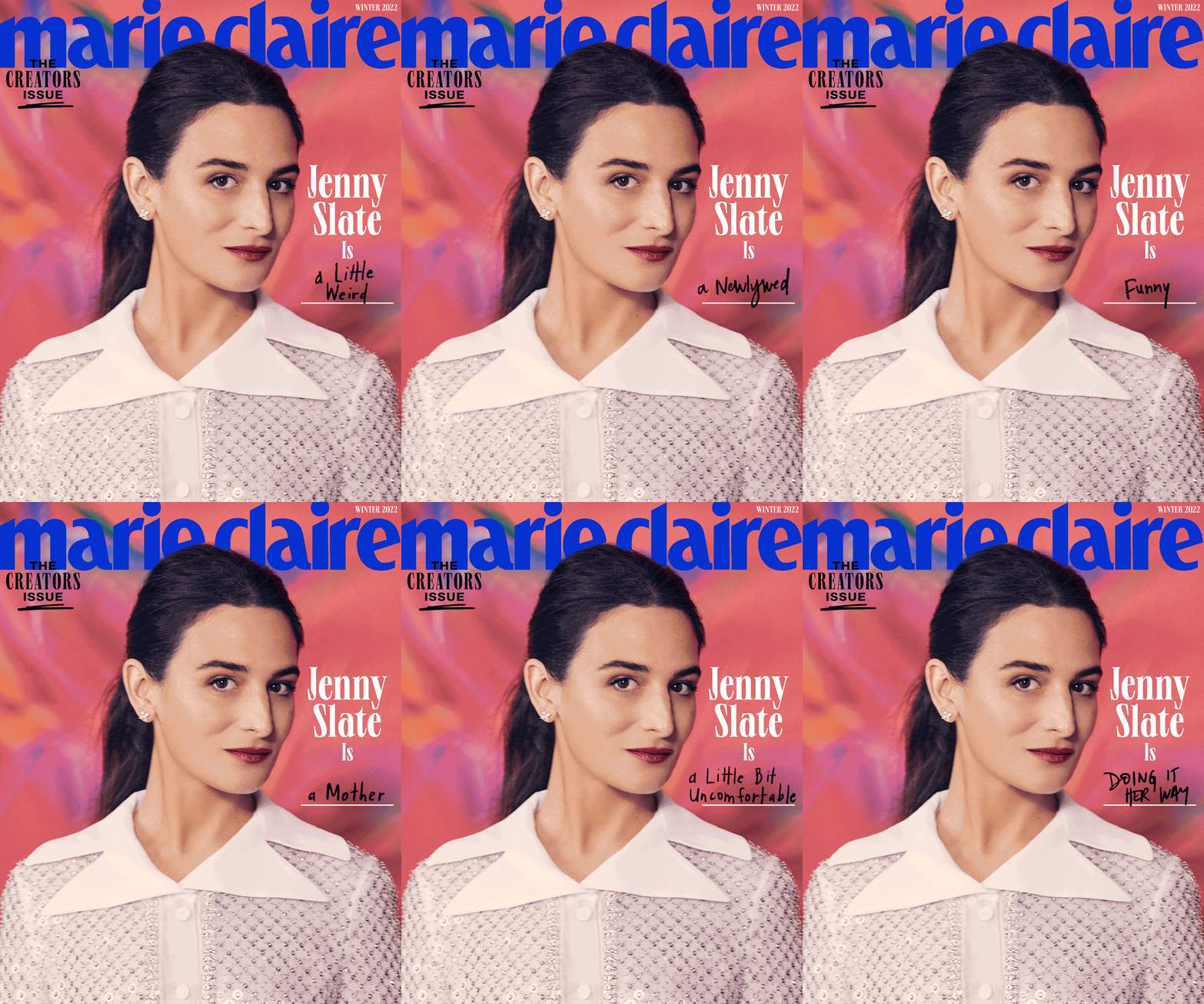
Click here to read the full Creators Issue.
Letter From the Editor

