Marie Claire Marie Claire
  • Celebrity
  • Fashion
  • Beauty
  • Culture
  • Power
  • Nice Talk
  • Fashion Month
  • More
    • Politics
    • Career Money
    • Health Fitness
    • Power Play
    • Travel
    • Promo Codes
    • Food Cocktails
    • About Us
    • Subscribe
    • Sex Love
  • Newsletter SIGN UP TO OUR NEWSLETTER
  • Marie Claire
    Marie Claire Newsletter

    Celebrity news, beauty, fashion advice, and fascinating features, delivered straight to your inbox!


    By submitting your information you agree to the Terms Conditions and Privacy Policy and are aged 16 or over.

    You are now subscribed

    Your newsletter sign-up was successful


    Want to add more newsletters?

    Marie Claire Daily

    Delivered daily

    Marie Claire Daily

    Get exclusive access to fashion and beauty trends, hot-off-the-press celebrity news, and more.

    Marie Claire Self Checkout

    Sent weekly on Saturday

    Marie Claire Self Checkout

    Exclusive access to expert shopping and styling advice from Nikki Ogunnaike, Marie Claire's editor-in-chief.

    Maire Claire Face Forward

    Once a week

    Maire Claire Face Forward

    Insider tips and recommendations for skin, hair, makeup, nails and more from Hannah Baxter, Marie Claire's beauty director.

    Livingetc

    Once a week

    Livingetc

    Your shortcut to the now and the next in contemporary home decoration, from designing a fashion-forward kitchen to decoding color schemes, and the latest interiors trends.

    Homes amp; Gardens

    Delivered Daily

    Homes Gardens

    The ultimate interior design resource from the world's leading experts - discover inspiring decorating ideas, color scheming know-how, garden inspiration and shopping expertise.


    An account already exists for this email address, please log in.
    Trending
    • NYFW
    • Life In Plastic
    • Cari Champion
    • New Books
    • Postpartum Psychosis
    1. Politics

    Your Data Is Discriminating...Against You

    For some, privacy infringement doesn’t just mean annoying ads; it could mean being denied a job or housing. Prachi Gupta investigates big data’s big problem.

    Prachi Gupta#039;s avatar
    By Prachi Gupta
    Published 1 October 2020 In News

    When you purchase through links on our site, we may earn an affiliate commission. Here’s how it works.

    privacy
    (Image credit: Susanna Hayward / Getty Images)
    • Facebook
    • X
    • Pinterest
    Share this article
    Join the conversation
    Follow us
    Add us as a preferred source on Google
    Subscribe to our newsletter

    In 2016, Carmen Arroyo’s 22-year-old son, Mikhail, regained consciousness from a six-month coma. He had been electrocuted while atop an electrical pole and had fallen nearly 30 feet, leaving him unable to walk, speak, or take care of himself. Arroyo, then 44, filed an application with her landlord requesting permission for her son to move into her apartment in Willimantic, Connecticut, with her. According to court records, the application was quickly denied without explanation, and Mikhail was sent to a rehabilitation facility, where he would remain for more than a year while his mother searched for a reason why.

    Arroyo contacted the Connecticut Fair Housing Center (CFHC), a nonprofit that provides free legal services to alleged victims of housing discrimination. In the process of filing a complaint against the landlord, Arroyo and her lawyers discovered that the landlord didn’t know why Arroyo was denied either; the decision hadn’t been made by him but by an algorithm used by CoreLogic, a software company he had enlisted to screen potential tenants. After Arroyo filed her complaint, the landlord allowed Mikhail to move in with his mother. Arroyo’s lawyers kept digging and ultimately determined what caused the rejection: a citation for shoplifting from 2014 (which has been withdrawn), according to court documents. “He was blacklisted from housing, despite the fact that he is so severely disabled now and is incapable of committing any crime,” says Salmun Kazerounian, a staff attorney from CFHC who represents Arroyo.

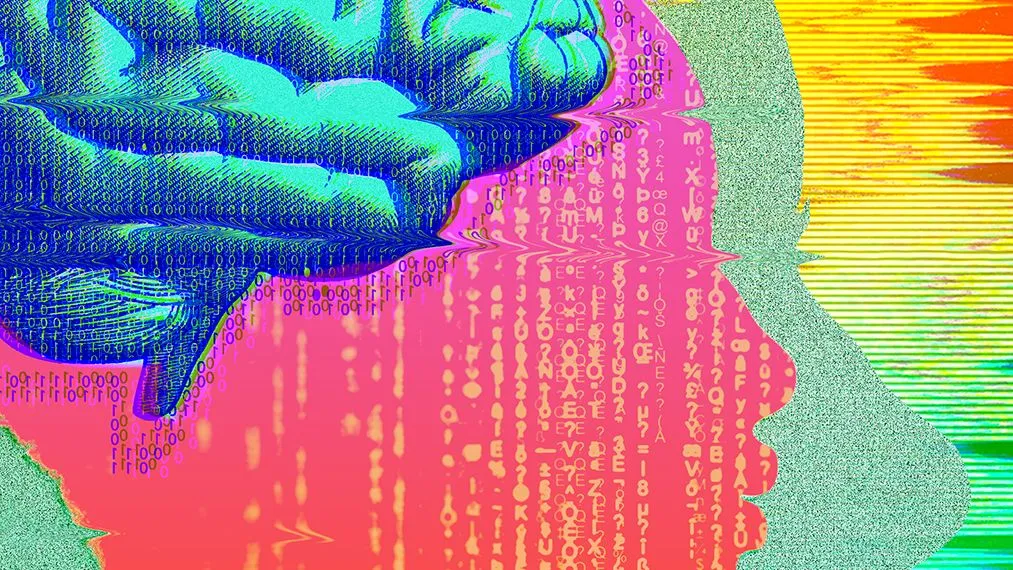
    What happened to the Arroyo family is just one example of data leading to discrimination. Automated data systems—technology like CoreLogic’s—use collected intel (public data, such as DMV and court records, that may also be packaged with information scraped from the Internet, like social-media activity) to make life-altering decisions, including whether applicants get jobs, the cost of their insurance, or how a community is policed. In theory, these systems are built to eliminate bias present in human decision-making. In reality, they can fuel it.

    Latest Videos FromMarie Claire
    Watch full video here:

    That is in part because algorithms are made up of biased data and often don’t consider other relevant factors. Because low-income people have more contact with government agencies (for benefits like Medicaid), a disproportionate amount of their info feeds these systems. Not only can this data fall into corporate hands, but the government itself uses it to surveil. For example, when UC Berkeley law professor Khiara Bridges interviewed pregnant women applying for prenatal care under Medicaid, she found that they had to reveal their sexual histories and incidences of domestic violence—details that can then be shared with other public agencies. “I talked to pregnant women who came to the clinic just to get prenatal care, and then the next day they would get a call from Child Protective Services,” Bridges says. When people seek support from the state, “that can end up penalizing them later,” adds University of Baltimore law professor Michele E. Gilman. A person applying for a public benefit can be flagged as a risk, which limits future housing or employment opportunities. People who don’t need to apply for public benefits are exempt from these injustices.

    The problem is pervasive, invisible, and cyclical: Biased data is used to justify surveillance, creating an endless feedback loop of discrimination. In 2012, the Chicago Police Department began using predictive analytics, reliant mostly on arrest-record data, to increase surveillance on certain individuals it considered more likely to commit, or be victims of, gun violence. The program was shelved in 2019 after findings showed it was ineffective at reducing homicides. Civil-rights groups said it perpetuated racial bias. “The algorithm is developed from what you give it,” says Brandi Collins-Dexter, senior campaign director for racial-justice-advocacy group Color of Change. “If you give it trash, it’s going to give you trash.” Feed an algorithm biased information and it will enable future bias.

    You may like
    • lisitng Anti-Trans Legislation Isn't About "Protecting Girls"—It's About Distracting Us From What Matters
    • Black-and-white three-panel collage of mothers holding and cuddling their babies. We Asked Women to Share Private Texts, Searches, and Notes From Their Darkest Postpartum Days
    • A photo of Nikki Ogunnaike with an inset photo of Jazzy Collins and text reading Money. Power. Style. Nice Talk with Nikki Ogunnaike How Do Problematic Contestants Keep Getting Cast on Reality TV? A Casting Director Explains

    This reality is the crux of the Arroyo case, the first of its kind: Mikhail, who is Latino, is one of the nearly one third of working-age Americans who have a criminal record, a disproportionate number of whom are Black or Latinx. His lawyers are suing CoreLogic, arguing that, under the guise of neutrality and efficiency, its software reinforces discriminatory policies. (The lawsuit is still pending, and CoreLogic has denied any wrongdoing.) If Arroyo wins, it will be a small step forward. But, unless the U.S. adopts stronger data-privacy legislation, these life-altering structures will go largely unchecked, as they are both “powerful and invisible,” according to Jennifer Lee of the ACLU of Washington. Her organization is just one pushing for regulations. Until that happens, we will continue to be watched by discriminatory systems unseen—and minority groups will feel those eyes most of all.

    Algorithms can use data to make decisions about a specific person, like Arroyo, but some use it to make inferences on entire groups. This can lead to sweeping, discriminatory generalizations: Facebook has come under fire for showing different housing and job ads to different users based on race and gender; in 2018, Amazon discovered that its automated hiring tool picked male candidates over female ones. In these instances, bias was baked into decision-making tools. Even if the data is not specifically about race or gender, data points—like a person’s music interests or zip code—can become “proxies,” according to Collins-Dexter.

    Marie Claire Newsletter

    Celebrity news, beauty, fashion advice, and fascinating features, delivered straight to your inbox!

    By submitting your information you agree to the Terms Conditions and Privacy Policy and are aged 16 or over.

    This story originally appeared in the Fall 2020 issue of Marie Claire.

    subscribe here

    RELATED STORIES

    Your body

    (Image credit: Susanna Hayward / Getty Images)

    Your Body, Your Business?

    workplace

    (Image credit: Susanna Hayward / Getty Images)

    Is My Workplace Watching Me?

    Prachi Gupta
    Prachi Gupta
    Social Links Navigation

    Prachi Gupta is an award-winning journalist based in New York. Her first book, about Rep. Alexandria Ocasio-Cortez, is available via Workman Publishing.

    Read more
    Black-and-white three-panel collage of mothers holding and cuddling their babies.
    Politics We Asked Women to Share Private Texts, Searches, and Notes From Their Darkest Postpartum Days
    By Noor Ibrahim
    A photo of Nikki Ogunnaike with an inset photo of Jazzy Collins and text reading Money. Power. Style. Nice Talk with Nikki Ogunnaike
    Culture How Do Problematic Contestants Keep Getting Cast on Reality TV? A Casting Director Explains Emmy-winning casting director Jazzy Collins answers a major reality TV question on the "Nice Talk" podcast.
    By Lia Beck
     
     
    stassi schroeder gets her hair and makeup done in a robe in a still from house of stassi
    TV shows Why Is Reality TV Suddenly Breaking the Fourth Wall?
    By Jessica Toomer
    Harry Jowsey wears a tuxedo shirt while speaking with a woman in a wedding veil, in a still from the #039;Let#039;s Marry Harry#039; finale.
    TV shows We No Longer Think Marriage Is a "Prize." Why Do Netflix Dating Shows? The streamer has reached a new frontier of preying on women’s desire for partnership.
    By Quinci LeGardye
     
     
    Latest in Politics
    collage of gloria Steinem
    Politics Gloria Steinem "Passes Away Peacefully" at 92
    Black-and-white three-panel collage of mothers holding and cuddling their babies.
    Politics We Asked Women to Share Private Texts, Searches, and Notes From Their Darkest Postpartum Days
     
     
    A portrait of Jessica Tarlov seated outdoors in a teal pantsuit.
    Politics Fox News’s Favorite Nasty Woman
    lisitng
    Politics Anti-Trans Legislation Isn't About "Protecting Girls"—It's About Distracting Us From What Matters
     
     
    Latest in News
    Jennifer Lopez wears a brown leotard with rare Nike sneakers, embracing Hailey Bieber#039;s jelly shoe sneaker hybrid trend.
    Celebrity Style Jennifer Lopez Is Embracing the Jelly Shoe Hybrid Trend
    Michelle Obama was spotted attending Celine Dion’s concert in Paris, where she made a stylish appearance in a Diotima dress and carried a Liffner bag
    Celebrity Style Michelle Obama Hops on Fall 2026's Suede Bag Trend
     
     
    Queen Elizabeth, Princess Diana (1961 - 1997) and Prince Charles at Victoria Station, London, where they will welcome a state delegation from Nigeria, March 1989.
    Royals Why Queen Elizabeth "Was Furious" With Princess Diana
    King Charles wearing a crown at his coronation
    Royals Royal Fans Help "Fix" an "Embarrassing" King Charles Mistake


    Marie Claire
    RSS
    • About us
    • Contact Future's experts
    • Contact us
    • Advertise Online
    • Newsletter
    • Terms and conditions
    • Privacy policy
    • Cookies policy
    • Careers
    Add as a preferred source on Google Add as a preferred source on Google

    Marie Claire is part of Future US Inc, an international media group and leading digital publisher. Visit our corporate site.

    © Future US, Inc. Full 7th Floor, 130 West 42nd Street, New York, NY 10036.