In Her New Essay Collection, Jesmyn Ward "Looks Squarely" at the State That Raised Her—and Is Raising Her Children
In an exclusive excerpt from her new book, 'On Witness and Respair,' the author writes about her experience growing up in a multigenerational family in rural Mississippi.

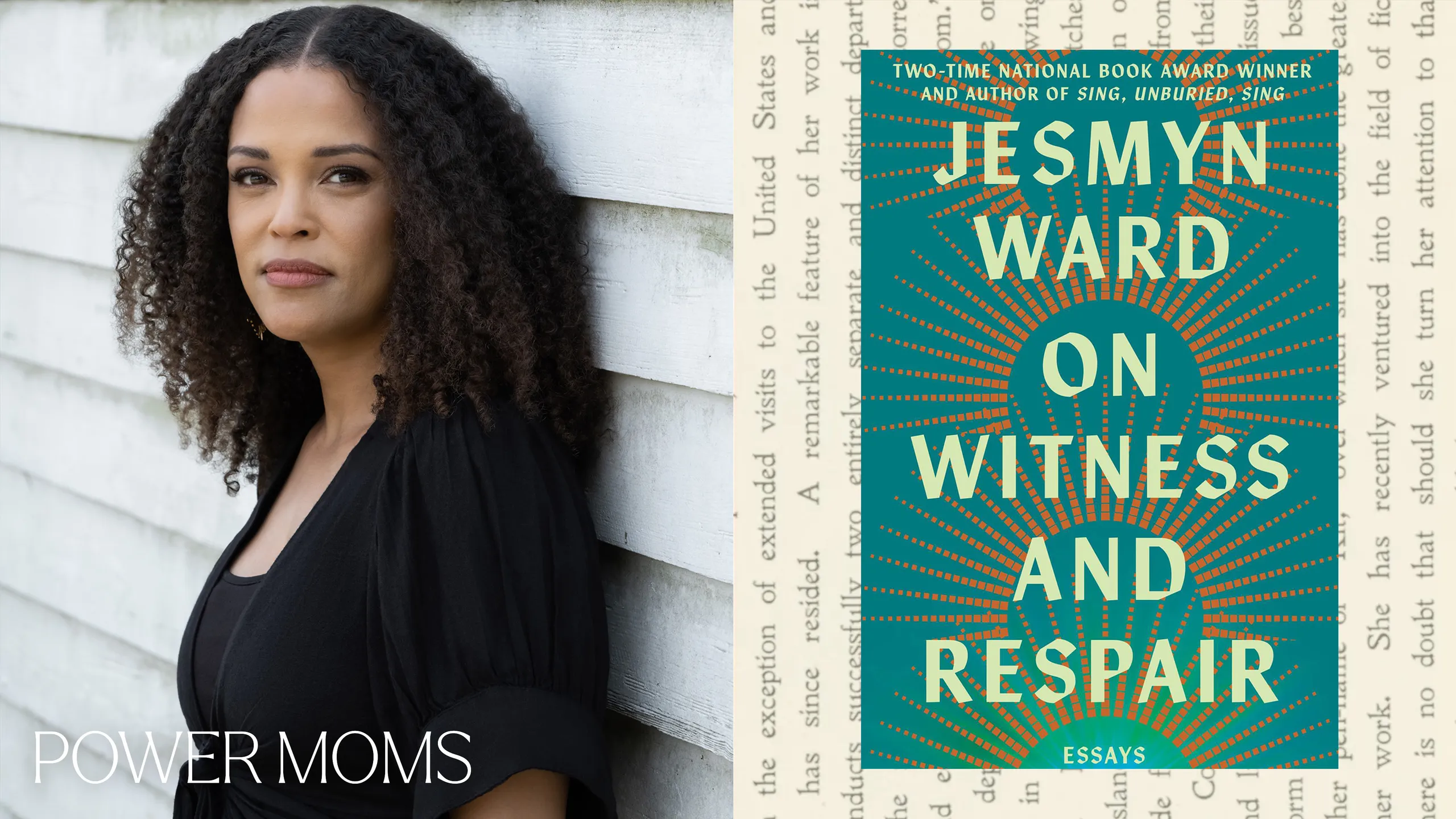
Much of Jesmyn Ward’s time is spent raising her three children, but through her words, she’s also nurtured countless readers. Widely regarded as one of the defining voices of her generation, the author has enriched audiences with her lyrical prose and moving stories about Black identity and kinship in the South since her 2008 debut, Where the Line Bleeds, hit shelves, and her sophomore novel, 2011’s Salvage the Bones, won the National Book Award for Fiction.
Throughout her career, Ward has meditated on familial strength and mother-child relationships—be it the memories Annis recalls of her ancestral matriarchs, leading to her rebirth, in Let Us Descend; or how trauma and systemic structures set up mothers to fail in Sing, Unburied, Sing. "Understanding who we are as family members, caregivers, caretakers, and as children reveals who we are elementally as human beings," Ward tells Marie Claire.
Each of Ward's novels is set in her home state of Mississippi, a reflection of the “admittedly tortured love I feel for [the state],” she writes in her new collection of personal essays, On Witness and Respair. "I wanted to look squarely at the place and people who made me.”
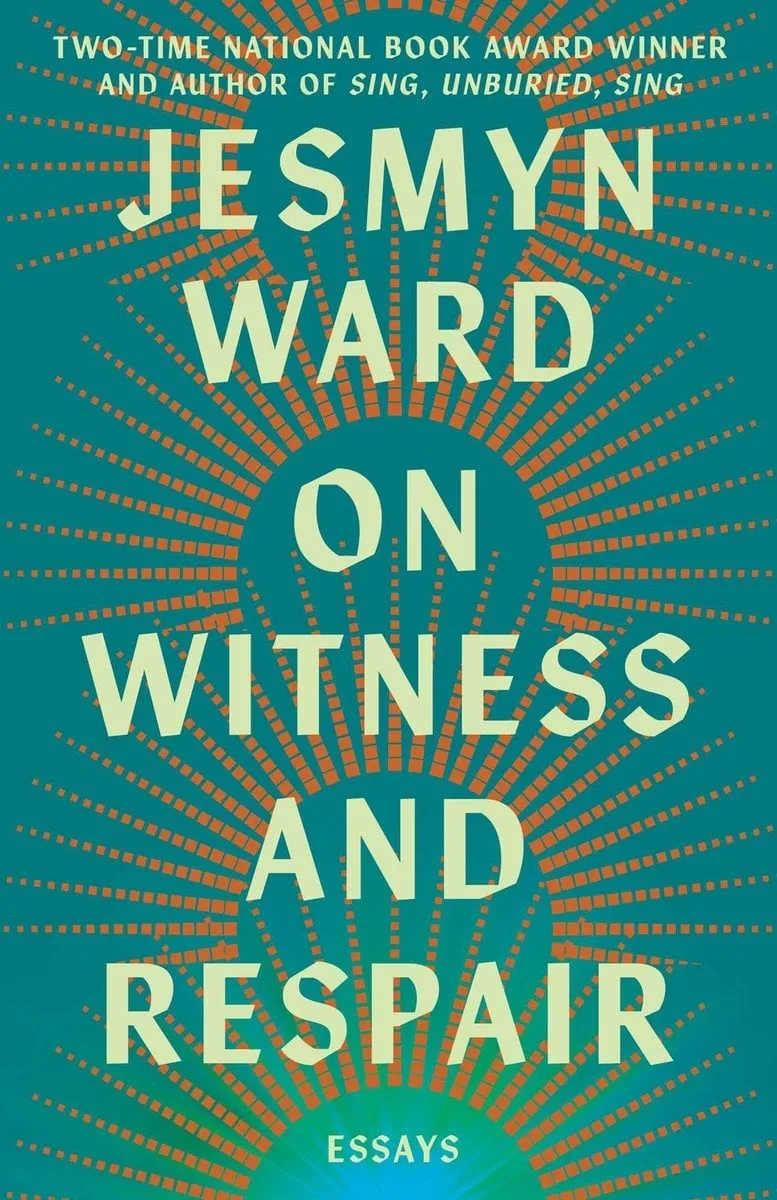
That place, and those people, are threaded not only through Ward’s work, but her present-day life: She and her partner are raising three children in DeLisle, Mississippi, the same small town where Ward grew up surrounded by family. In On Witness and Repair, out May 19, Ward explores her upbringing in DeLisle and her experiences with grief, including the loss of her husband and the father of her two eldest children, as well as how she aspires to uplift her son as he comes of age in an era of political divisiveness.
The book is among this year’s most highly anticipated releases, and ahead of its publication, Ward shares an exclusive excerpt on how she came to build upon the storytelling tradition of Southern writers who came before her.
I was in elementary school. I felt such awe looking at that map, studying the sometimes kind, oftentimes serious illustrated faces of the writers: William Faulkner, Eudora Welty, and Richard Wright beamed the brightest in my childhood memory. I was too young for their work then, but as I sat in that linoleum-tiled library with its metal bookshelves and strong fluorescent lighting, that map, along with the books lining the shelves, transformed the space into something expansive and precious.
I sat at those long tables and sank into story; their authors transported me so completely that I tasted the food the characters ate, the tea they drank, and felt every little tic of terror or joy or sadness they felt. Writers were magic-workers. They spun tales from the ether, wrote narratives so riveting that I often felt a kind of overwhelming longing as I read. I could already sense the worlds they constructed, already felt so much with the characters; why couldn’t I just step through from my world into theirs? Even at the tender age of eight, I knew I was poor and Black in Mississippi, and that meant eating WIC-issued cornflakes and never being sated by them. That meant being too hot for most of the year, and being too cold the rest because we didn’t have any central climate control in any of our homes. It meant hardly ever experiencing the luxury of solitude because I spent many of my childhood years growing up in a house where aunts and uncles and my parents and my first cousins all lived together, by necessity.
Reading offered respite from all of this, but as I grew, I found myself seeking less escapism. As I grew, I understood that being Black and poor in Mississippi also meant Sunday baseball games at the local Negro-league park, everyone communing and eating and celebrating. It meant swimming with everyone in our community at the local river, camping and cooking over open fires. It meant gathering for birthdays and anniversaries and just because, playing Al Green and Otis Redding and Denise LaSalle and dancing, old with young, babies with seniors, whirling in golden living rooms, amber kitchens, on pale blue porches. This understanding led me to wanting more empathy, more feeling, and it was then I was ready to engage with those famous Mississippi writers from the map.
I began with Welty first; I muddled my way through her short stories, grinning at her sly wit, before alighting in her essays. I fought my way through Faulkner, half understanding what was happening, feeling thunderous import lurking in the margins of every page. Even though I struggled with some of their work (Welty’s essays on jazz musicians soured me, Faulkner’s story about the bear frustrated me), I recognized their power, their magic. I appreciated the way Faulkner wrote the reader into a kind of fever dream of the South, the way Welty invited the reader into the story and made one feel as if they were chums, in on a marvelous joke. But Wright struck me in the marrow, moving me. I read Wright’s memoir, Black Boy, and when he wrote about being a young, deeply feeling boy in the Mississippi Delta, I knew him. I knew him when he shimmied under houses to play in the shade of the foundation, seeking some reprieve from the Southern heat. I knew him when he opened his mouth under the spigot to drink water to fill his stomach with something, anything, as hunger wrung him; I’d done the same as a child, gulped down faucet water that smelled like sulfur, tasted of minerals. Wright worked a different kind of magic for me: it was elemental. He pushed me so far out of my own experience and crowded me so completely into his own that for a time, we became one, and when I emerged from his memoir, all that he had confirmed and questioned in his narrative rang through me with the endless echo of a great bell. By the time I read Wright, I knew I wanted to be a writer, too, that I wanted to work a little of the magic Wright had for me: that I hoped to reach some other young, solitary, hungry person in the world, barefoot and heartsore, desperate for story to help them figure out their lives, this world.
I wanted to look squarely at the place and people who made me, and to do my best to write with honesty, generosity, and that admittedly tortured love I feel for Mississippi.
But something about Wright’s memoir was unsettling for me. He left Mississippi, traveled north, and joined the Communist Party. I didn’t necessarily disagree with his politics; I admit that I knew so little about communism that I couldn’t form an opinion. It was his leaving his home that most bruised me. It was the rancor with which he wrote about his early life, the details of the poverty he experienced, the violence at the hands of friends and family, the fact that there was little to no warmth, little to no connection, that disturbed me. What kept him alive in Mississippi? I knew what had kept me alive: my grandmother letting me perch easily in her lap, her lipstick messy as she told story after story and laughed. My father, muscled and beautiful, lifting me to the back of his motorcycle, jamming a helmet down on my skull after securing Walkman headphones on my ears, and then hitting play as he pulled out of my elementary school parking lot, Prince’s guitar warping the tunnel of trees around us. My mother standing behind me at the stove, whisking the spoon steadily along the bottom of the pan, teaching me how quickly pecan candy should be stirred. My brother and sisters, piled into my mother’s small car, fighting with our elbows for more space in the back seat, combatants and companions at once, comfort in knowing that being packed like tinned fish in the car meant we were together.
I knew something or someone had kept Wright alive, but I couldn’t easily decipher who or what had done so in Black Boy. His refusal to give me a glimpse of that which nurtured him in his life and gave him the wherewithal to escape taught me this about creative nonfiction: I wanted to look squarely at the place and people who made me, and to do my best to write with honesty, generosity, and that admittedly tortured love I feel for Mississippi. A love heavy with hanging moss and overarching live oaks, heavy with one great-grandfather shot and killed by whites who accused him of flirting with a white woman in a local store, with another slaughtered in the forest at the side of his moonshine still, with the specter of my maternal grandmother made to ride in a trunk to cross a sundown town safely, which marked her so deeply she told me that story multiple times during her life—which marked me so deeply in the hearing that I tell it as she did, again and again.
It took years, but I wrote toward nuance as well as I could.
I’m digressive, like my maternal grandmother. I can be long-winded, like my father. I take my time telling a story, like my mother, letting a narrative unspool over years.
I still thought of myself as a novelist. I’m digressive, like my maternal grandmother. I can be long-winded, like my father. I take my time telling a story, like my mother, letting a narrative unspool over years. Short stories and short-form creative nonfiction are not conducive to the kind of writing that comes naturally to me. I’ll also admit that I was carrying some doubt from my undergraduate years, wherein I’d struggled with academic essay writing so much that a TA once told me that I could not, in fact, write. According to her, I was deluding myself into thinking I could.
In a way, she was correct. Academic essays required a kind of bloodless precision, focus, and clarity that I hardly ever possessed. Narrative essays required the opposite: a willingness to explore, to sit with the questions, to sometimes fail in finding an answer. In the doing, to write toward revelation. I learned that if I held the narrative loosely to me, following where it pulled, I could discover facts and realities about myself and those I loved that I did not know when I set down the first word. This promise has led me through every essay over the years, enabling a kind of self-transformation on the page.
Excerpted from On Witness and Respair: Essays by Jesmyn Ward. Copyright © 2026 by Jesmyn Ward. Reprinted by permission of Scribner, an imprint of Simon Schuster, LLC.