Governor Michelle Lujan Grisham, the Universal Child Care Whisperer
How one governor played the long game to achieve free child care for New Mexico—the first U.S. state to ever provide it.

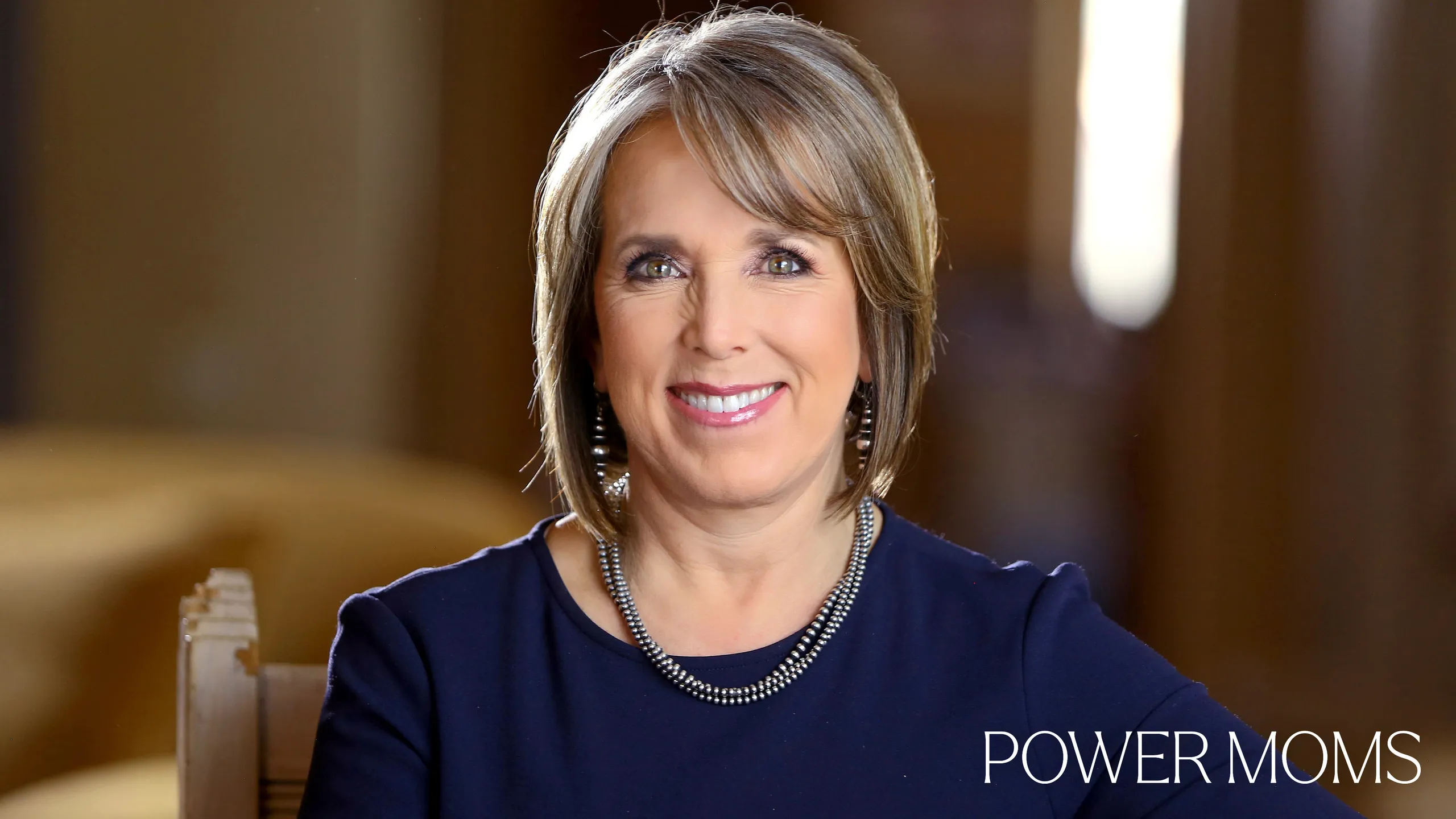
Government-funded child care in the United States has long been considered a political long shot. But Governor Michelle Lujan Grisham of New Mexico has a habit of breaking from expectation, and decided to take an unconventional approach to make it happen.
When she took office in 2019, making child care accessible was among her biggest goals. Although it took six years (“I didn’t get to free overnight,” she says via Zoom), the governor kicked off the process with unwavering determination—and a little help from her then-3-year-old granddaughter, Avery.
“I had my granddaughter on my lap, and I testified in the committee, which you don't do as a governor," she says of the 2019 legislative session. "I’m a mom. I'm a grandmother. I know how important pre-K and early childhood investments are to families and children.”
As Avery colored in her lap, Lujan Grisham advocated for both pre-K and universal child care, asking if anyone on the committee disagreed that “pre-K helps close achievement gaps and is good for kids." She also called attention to the state's piecemeal approach: "Does my granddaughter get to have early childhood [education]—or is it yours?”
She was prepared for a long fight ahead, knowing that legislators had been unsuccessful in passing state-funded pre-K for more than a decade. But ultimately, her path to success was smoother than anyone could have anticipated.
“They basically just appropriated $320 million into a trust fund [the New Mexico Early Childhood Trust Fund] for pre-K and child care,” she says—an unprecedented move in and of itself.
Rather than push immediately for universal child care, the governor first turned her attention to state-funded pre-K—a "runway" to her end goal, she says now. Then, in 2022, she and other lawmakers succeeded in directing a percentage of revenues from the state's oil and gas reserves to the Early Childhood Trust Fund. As oil and gas prices climbed, the Fund grew from $320 million in 2020 to a jaw-dropping $9 billion in 2024.
By November 2025—six years after the governor's legislative session alongside her three-year-old granddaughter—Lujan Grisham was able to roll out universal child care, making New Mexico the first state in the nation to do so.
“All I had to do was build a jet, put people in it, fly them, and land it," Lujan Grisham says now. "Because I had the infrastructure. That was the turning point.”
I’m a mom. I'm a grandmother. I know how important pre-K and early childhood investments are to families and children.
As the first state to offer universal child care, New Mexico is also the first state to reap the benefits of doing so. Per the Bipartisan Policy Center’s 2026 National and State Child Care Data Overview, American families spend an average of $13,128 per child on care each year. The high costs and lack of appropriate alternatives have led to many moms dropping out of the workforce—a consequence estimated to cost the United States up to $329 billion in lost revenue over the next decade.
In New Mexico, poverty rates are among the highest in the country. Child care costs are often the difference between a parent being able to work outside of the home or not, Lujan Grisham says—and, in some cases, being able to afford children at all. Though universal child care is still in its infancy in New Mexico, it's already created game-changing opportunities, she adds, allowing families to afford safer housing, have a second child, or chase a new career.

Lujan Grisham at the Democratic National Convention in 2024.
“I had a [constituent] who always wanted to be an entrepreneur in advanced energy and high-tech work,” she says of Santa Fe-based Julia Wise. “She worked for one of our national labs, has two kids, couldn't afford to leave the lab, couldn't afford child care and all the other costs. She couldn't take a risk.”
That changed once child care became universally accessible. “With both boys in school, we were paying over $30,000 per year for child care,” Wise says. “What would you do with $30,000 almost overnight? It de-risked so much.”
Wise left her job and chased a more entrepreneurial role. As a result, "five additional scientists moved to New Mexico, largely because they want to work with [Wise], and secondarily, they're going to have access to free child care," the governor says. "So she's building that ecosystem."
In Lujan Grisham's view, the takeaway is simple: When child care costs are no longer a barrier, families and economies can function more effectively.
But universal child care is just one piece of a broader agenda. As a longtime state employee—Lujan Grisham worked her way up to leading the New Mexico Department of Health and the Department of Aging and Long-term Services before becoming governor—she struggled to even take six weeks off from work after giving birth to her first child. With her second, she was “back at work in two weeks.” The experience stayed with her. “I didn’t want state employees to have to navigate any of that."
All I had to do was build a jet, put people in it, fly them, and land it.
So, when she took office in 2019, New Mexico introduced 12 weeks of paid parental leave for government employees. The time off, available to both parents, is a first for the state; the goal is to expand the benefit to all workers statewide. (Though her gubernatorial term will expire next year, “I’ve got 20,000 advocates who will help make sure that the next governor has every tool he or she is going to need to get paid leave a statutory requirement," she says.)
Another piece of the agenda: free meals at school. Under the state's 2023 Healthy Hunger-Free Students Bill of Rights Act, all K-12 students, regardless of income, receive free breakfast and lunch at school.
“New Mexico went from 50th in childhood poverty to 23rd, and I think we're actually even better," Lujan Grisham says of the efforts. As she awaits the latest set of data points, Lujan Grisham says she’s “expecting to be in the teens.”
While she admits that New Mexico is in a unique position due to its natural resources, she believes other states can find their own paths forward, whether it’s through tax credits, corporate partnerships, or alternative funding strategies. “States have to figure out different pools of resources, and then they have to create economic opportunity that's linked to that." In New York City, for example, Mayor Zohran Mamdani is asking city philanthropists to donate to the cause of universal child care.
Ultimately, Lujan Grisham says, the country must “believe in the power of supporting families and children.” If that shift happens, New Mexico won’t be an outlier for long—it will be a blueprint.