What Will COVID-19 Do to Pregnant Women's Mental Health?
Doctors are preparing for an increase in pandemic-related mental health issues brought on by stress, isolation, and economic distress.

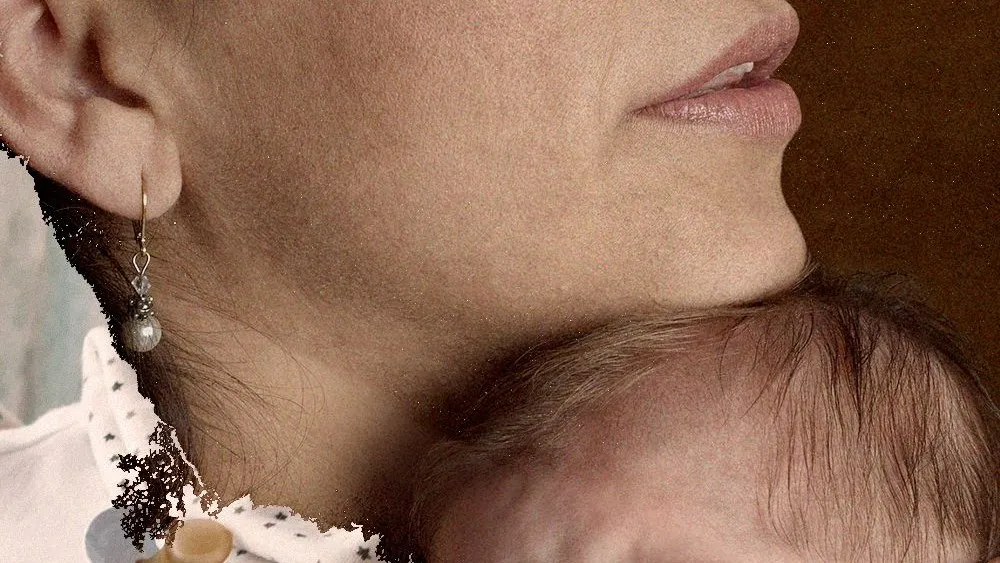
Christine Hou’s contractions were getting closer and closer together. She had to make a choice: Hang in there a little bit longer so her husband could park and come into the hospital with her or go it alone.
It was March 26th in Manhattan, right as the Coronavirus outbreak was starting to peak, and some of New York City’s top hospitals had, in response, implemented new birthing policies restricting labor and delivery wards and stipulating that no support partners would be allowed.
Hou, a 34-year-old writer and yoga instructor, knew that due to those restrictions her husband wouldn’t be allowed to go into the delivery room with her. But, she said, “I just wanted him to come in with me. It was really scary.” Ultimately, her husband made the call that they shouldn’t risk it. It was her second child and her contractions were close—parking could take too long.
Hou entered the ER alone. It was the only entrance open, which meant that COVID-19 patients and everyone else would have to go through the same set of doors. To manage the pain and her fear, Hou remembers sitting in the waiting room “counting things on the wall to pass the time, the lights on the ceiling, the pattern on the curtains.”
I was crying for most of the procedure because I just didn’t know what was going on.
She delivered her daughter by C-section. She was allowed to bring her phone with her, so she was able to FaceTime her husband during the operation. “I had to hold the phone and my arm was so cold and jittery from the anesthesia,” she said. “I was crying for most of the procedure because I just didn’t know what was going on, and I just kept saying that I wanted him to be there.”
This story ultimately ends as happily as can be: Hou and her daughter are now home safely with the rest of her family. But not before several more harrowing hours in the hospital. After delivery, Hou’s baby was immediately taken to the NICU for testing and to be intubated due to low oxygen levels. It was nearly 12 hours before Hou was able to see her baby, as she had to await the results of the COVID-19 test she’d taken earlier.
“The whole thing was really traumatic,” Hou said.
Hou’s experience will sadly not be unusual for these times. And it’s illustrative of the kind of mental health risks pregnant people across the country are vulnerable to during the pandemic.
Although New York’s hospitals reversed the controversial decision to ban all support partners in labor and delivery following a government order, hospitals throughout the country have adopted restrictive policies surrounding birth, many allowing just one support partner. (These policies are implemented as precautionary measures against the outbreak as it rages and will continue to evolve as more information about the virus and how to treat it become known.)
Beyond the stressful and potentially traumatic hospital experience, the pandemic creates and amplifies feelings of uncertainty and loneliness.
Doctors and mental health professionals are preparing for an increase in pandemic-related mental health issues brought on by stress, isolation, and economic distress. “We’re expecting to see a secondary outbreak of mental health issues related to ongoing stress that people are dealing with,” said Dr. Jason Rafferty, a Providence, RI-based pediatrician and psychologist who co-authored the American Academy of Pediatrics’ policy statement on incorporating the recognition and management of perinatal depression into pediatric practice. “Included in all of that is perinatal depression.”

Dr. Pooja Lakshmin, a clinical assistant professor of psychiatry at George Washington University in Washington, D.C., says that she is already seeing an increase in incidences of perinatal—a term that refers to the time during pregnancy and up to one year after birth—anxiety and depression across several categories. “I’m seeing a worsening of symptoms in women who were already struggling with perinatal anxiety and depression, and I’m seeing women who were previously struggling with anxiety now manifest symptoms of depression,” she said. Dr. Lakshmin credits that spike in depression, in part, to a lack of access to coping mechanisms. Now that we are isolated and indoors, previously successful stress-management techniques like group exercise, being outdoors, and time to decompress alone are all gone.
We’re expecting to see a secondary outbreak of mental health issues related to ongoing stress that people are dealing with.
In their place is uncertainty: about the pandemic in general (when it will end, how long social distancing and isolation measures will be in place); around financial distress and unemployment; around going to a hospital and being exposed to the virus; and around COVID-19 and its effect on pregnant people, new mothers and newborns. “There’s not a lot of strong data and research that tells us whether COVID impacts pregnancy,” said Dr. Rafferty. “That creates a lot of fear and anxiety.” Indeed, for Jessica (who prefers not to give her last name), a Brooklyn-based lawyer who gave birth to her second child the last week in March, it was the fear of the unknown that contributed most to her stress. Particularly in the hospital, Jessica said, “Everyone is stressed, the staff is figuring out how to deal with everything, and you can feel it. It isn’t the usual atmosphere of a maternity ward.”
While the pandemic may exacerbate conditions that can lead to perinatal depression and anxiety, there are lots of ways to get support. The communities and caregivers that would typically support women during birth and postpartum—doulas, lactations consultations, and behavioral therapists—have been rushing to adapt their services digitally now that they can no longer physically see patients.
Doulas typically do very hands-on work, attending their clients’ births, massaging and coaching them through labor, advocating for them during delivery in the hospital, and tending to them postpartum. Studies have shown that the presence of a doula is linked to better birth outcomes, including a lower likelihood of having a low birth weight baby, a lower likelihood of experiencing birth complications, and a dramatic reduction in women’s odds of having a C-section. Now they are figuring out how to best be there for their clients virtually.
Related Stories


“Our biggest focus is on empowering the family and getting them so that they’re able to do it on their own,” said Domino Kirke, co-founder of Carriage House Birth, a doula agency in NYC and Los Angeles. The agency is offering online childbirth education classes, newborn care and infant feeding classes, and free pregnancy and new mom support groups. Still, Kirke is realistic about their limitations. “The model for care now is tons of prenatal support and tons of postpartum support and being on call to contact for strategy and advice during labor, but not necessarily having your doula’s face on an iPad for 12 hours.” Kirke cautions that having a doula on a screen during labor and delivery can take people out of the experience and be a distraction to doctors and nurses.
Mahmee, an LA-based telehealth platform that specializes in coordinating pre- and postpartum healthcare has been onboarding more behavioral therapists in anticipation of a spike in postpartum depression and anxiety. “It should not be seen as something shameful or to handle on your own,” said founder Melissa Hanna, who is already concerned about the long-term impact the pandemic will have on new moms. “This could be traumatic,” she said, “but your providers are aware and planning to support you.”
For her part, Hou sought therapy to help process the birth. “I still feel really bummed about everything,” she says, “but therapy has helped.”
Resources for Expectant and New Moms
- Childbirth education classes and free pregnant and new mom support groups via Carriage House Birth
- Peer-to-peer mom support groups for new and expectant mothers suffering from perinatal mood disorders or are simply scared and stressed right now via The Bloom Foundation.
- COVID-19 Maternal Well-Being Facebook Group started by Dr. Pooja Lakshmin MD (psychiatrist), Dr. Anita Patel MD (pediatrician) and Dr. Tara Abraham MD (OBGYN) to provide evidence-based information about pregnancy and postpartum during the pandemic and to give women a space to connect and support each other.
- Postpartum Support International offers free online support groups, a searchable by location provider directory and a helpline (1-800-944-4773).
- Support groups, health tracking tools, and one-on-one check-ins via Mahmee.
- Up to date news and resources at Massachusetts General Hospital’s Center for Women’s Mental Health.
