Meet Dr. Becky, the Millennial Parenting Guru Who Turned A Viral Instagram Post Into an Empire
The clinical psychologist opens up about her platform’s unexpected influence.

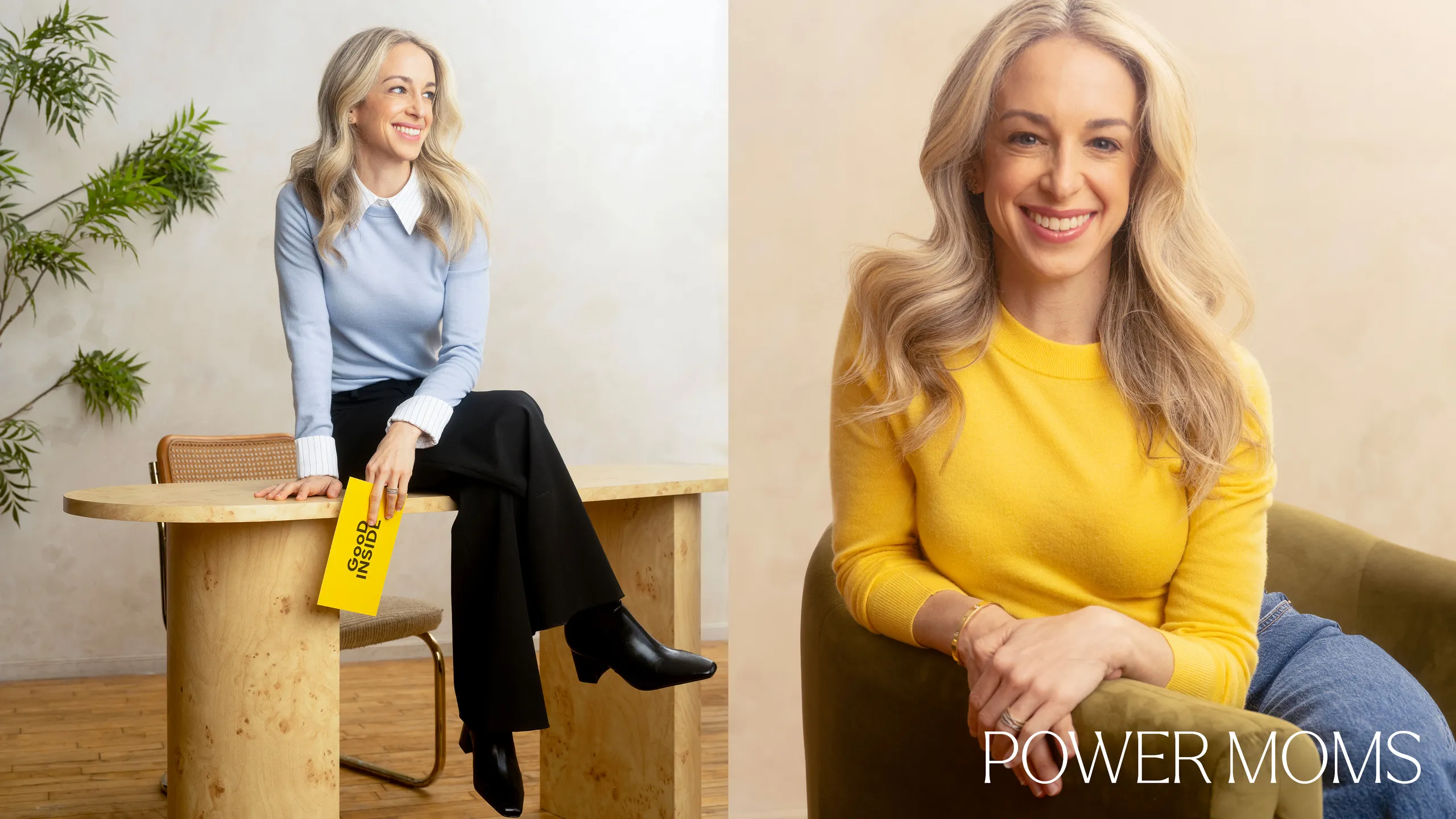
Becky Kennedy isn’t trying to help anyone become the perfect parent. That’s not possible. The 43-year-old clinical psychologist and author tells me very matter of factly on a Monday afternoon Zoom call in mid-March that perfection wouldn’t be her objective even if it was. “Perfect is creepy,” she says. “I don’t hold myself to the goal of being perfect or calm all the time.”
Kennedy is better known to her audience of 3.4 million on Instagram and 342,000 on TikTok as Dr. Becky, and it's that kind of honesty and open-mindedness—backed by the credibility of being a mom of three kids aged 14, 11, and 8—that got her there. She earned the title of the “Millennial parent whisperer” during the height of the COVID-19 pandemic, when she would share videos of herself empathetically addressing the anxieties of modern parenting from her New York City living room. Her popularity at a time when parenting advice is being spit out from all corners of the internet with regularity speaks for itself.
Kennedy has a lineup of Instagram videos boasting titles like “How to Say I’m Sorry” and “How to Stay Calm During a Tantrum,” but she maintains that parenting advice has never actually been the mission behind her platform. “I think of it much more as emotional infrastructure for a family,” she says.
Six years after her first viral Instagram post, which centered on how to respond to the stress and uncertainty of the pandemic, Kennedy is now the co-founder of Good Inside. It's a multi-platform brand that encompasses her podcast of the same name, her book, and a membership-based app that offers support in the form of online workshops, live events, a 24/7 AI-assisted chatbot, and more.
On our call, we got into what it means to be Good Inside, the importance of seeking out community as a parent, and the challenges of modern parenthood.
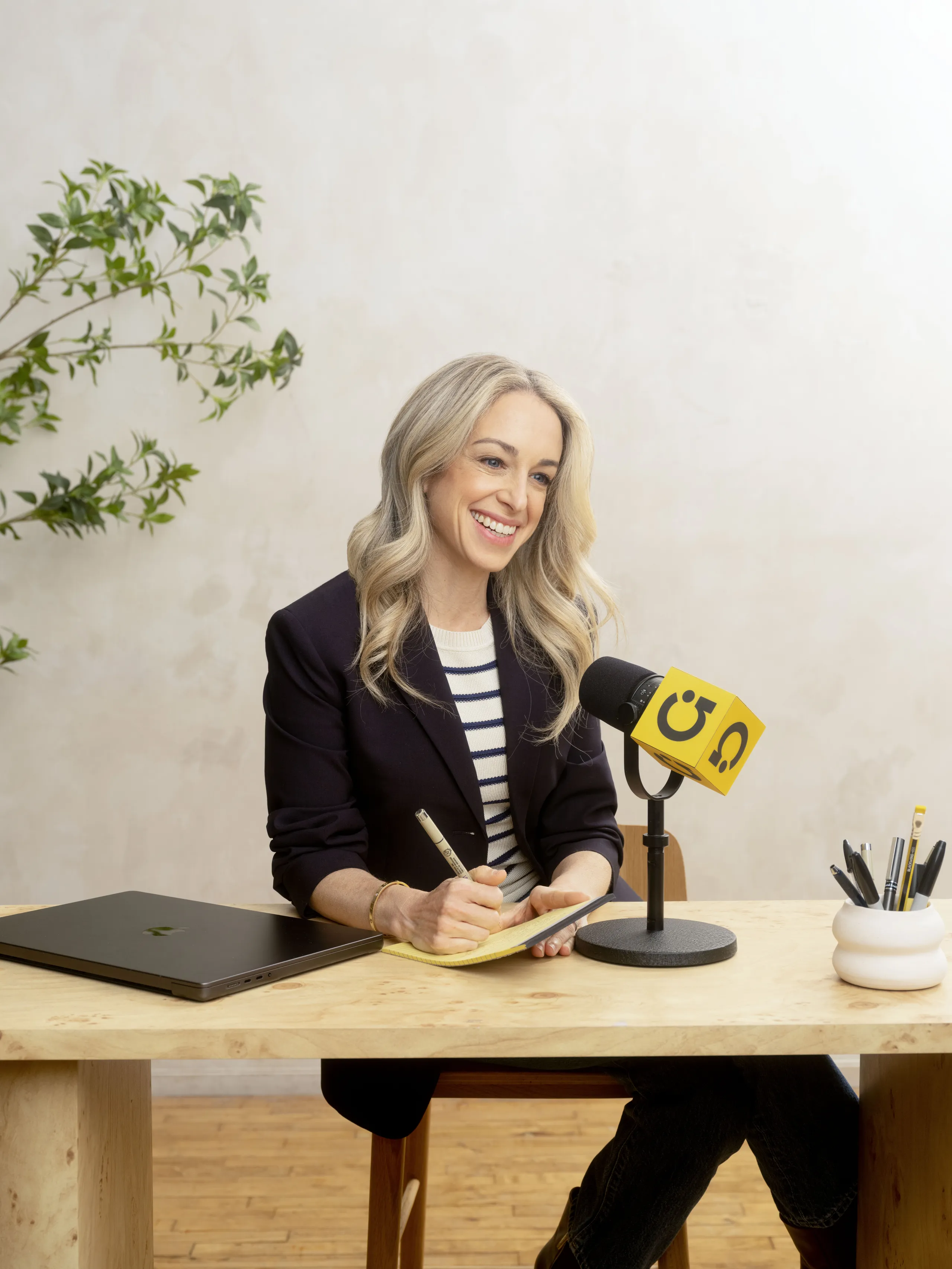
Your brand is called Good Inside. Can you explain what that means?
I think what it means is I have a sense of my internal worth separate from any given external behavior or moment, and that I can separate a moment that I'm not proud of from my internal worth. Even in the face of not being proud of my behavior, I can reflect: Why did I do that? What happened? What could I do differently the next time? Now I don't have so much shame, which freezes me. I always say on my podcast that, even as we struggle on the outside, we remain good inside, and I think it's that ability to stay in touch with your internal goodness that actually is kind of a necessary precondition for positive change.
Before you co-founded Good Inside, you were sharing personal stories about parenthood via social media. What made you think expanding your platform was necessary?
To me, social media can barely scratch the surface about the most important topics in our lives, so I love sharing thoughts and frameworks and ideas and snippets. But honestly, turning into something more came from DMs and people reaching out saying, "We want more. This is the first time something has made sense in my head and felt right in my heart." And I wanted to follow that thread. That's really what led to everything we do.
What kind of feedback were you initially hearing?
We have a lot of people in our community who aren't parents saying, "Oh, this just feels good for me as someone who doesn't have kids.” I think they were seeing through these social media clips and recognizing that these are deeper frameworks that they could be empowered by. People will say, “Oh, there's a post about a toddler, but I feel like this way of thinking about a boundary would be helpful with my boss or with my mother-in-law.” I have people who say, "I use this stuff all the time in the classroom” or “This would make me a better manager” or “I feel like this is marital advice.”
Has becoming a parent changed the way you practice psychology or interact with your patients?
Yes! I think so many of us are still kids in adult bodies and with adult responsibilities. And still, the things that we struggled with as kids or the areas where we often felt judged or unseen, they act themselves out. That's when we get triggered, that's when we have a hot reaction. And I think the beauty is that parenthood is just the most emotionally evocative journey we're on, and if we use it in that way, we see these moments we're not proud of in our own parenting, but we could use that, again, as a window to even better understand ourselves and grow further as parents or just as people.
“Maternal instinct” insinuates that parenting comes naturally...The only thing that comes instinctually in parenting is how you were parented.
How do you separate Dr. Becky, the psychologist, from Becky, the parent?
I always say to people, "My kids don't have Dr. Becky as a parent." That's true. But I think the thing that's built into Good Inside is that it’s not a platform for perfect parenting. It's not an approach to being a perfect parent. We always say that perfect is creepy. Perfect wouldn't even be the goal if it was possible. To quote Dr. Becky, we’ve built into Good Inside the idea of messing up, the idea of “I'm not going to be able to say what I want to say all the time,” and the idea that I can always repair. I think my kids have a parent who, yes, I think the Good Inside ideas and Dr. Becky ideas come to me as often as they can. They’re definitely the framework with which I understand my kids, but I don’t hold myself to the goal of being perfect or calm all the time. I try to do better more of the time, but repair when I struggle as much as possible.
You spoke to Trevor Noah about how necessary it is for parents to have community, but that’s a difficult thing to find these days as people become more isolated. Do you think your platform is filling that gap?
The best part about Good Inside is the community. Anyone who's deep in the Good Inside world kind of talks less about Dr. Becky and more about the other parents they meet. The best part of our membership is that there are members from over a hundred countries, and there's always someone awake to talk to. The discussions we're having online and live events—it's just the best corner of the internet. You don't find it anywhere else. People are pouring out their heart and being so real and responding to other people's vulnerabilities with, "Of course, that makes sense. Tell me more about that. Me too!" There's nothing I could ever say to a parent that is as powerful as the actual visceral experience of knowing you're not the only one, and AI cannot give that. Dr. Becky does not give that. The only thing that gives that is community. I'm very aware of that, which is why I'm so proud of the container we create for a safe community.
It's interesting that you brought up AI, because there are so many people who are turning to it for everything, including medical advice. As a psychologist, how do you navigate that?
I think it's really tempting to have something that, at least on the surface, offers this very quick fix and quick answers. I mean, I think the thing that it misses is, so often when we're anxious, our question isn't really the true question on our mind. We're asking a million questions about baby sleep, but kind of in the back of our head, we're wondering, “Is it going to be like this forever? Am I the only one struggling with this? Do I even understand what should be happening at this age?” And so we ask question after question after question, and the reason we keep doing it is because we're actually looking for something much deeper than the subject of our question, so I think AI is great. We all need a quick answer for something sometimes. I think we also all know at other moments, it's not actually landing in a way that feels helpful. So maybe instead of hammering away at the same thing and expecting a different response, [I need to do] something different. I think really importantly, Good Inside has never been about parenting advice. I think of us much more as emotional infrastructure for a family.
There’s no shame in investing in support for the hardest and most impactful job in the world.
We’re constantly being told that less people are having children, and the statistics show it. Do you think being a parent is harder now than it was a decade ago?
I don’t know from personal experience, but I do think it is. This is the first generation of parents who are parenting in a world that never turns off, and where there is short-term convenience and comfort everywhere. Raising children is an act of short-term inconvenience with long-term gain and I think this world we're living in is becoming increasingly oriented towards short-term convenience, short-term rewards, short-term dopamine available everywhere. Parenting and raising kids kind of requires the opposite of that, so it's hard. Having a phone means that any of us, as adults, can get endless entertainment with very, very little effort. Well, raising kids requires a lot of effort and not a lot of entertainment. It's a lot of tolerating the stress and doing things that are kind of hard short-term for a long-term benefit of raising another human.
You spoke on a podcast about “the myth of maternal instinct.” Why do you think this idea is harmful, particularly for moms?
“Maternal instinct” insinuates that parenting comes naturally and that you should just know. The only thing that comes instinctually in parenting is how you were parented. A lot of parents I know say that there are things they want to do differently, but we wouldn't expect someone who's raised in English to speak Mandarin naturally. We would say, "Sure, you could change languages. But you're going to have to learn Mandarin." That doesn't happen naturally, and I think that's really so much of what Good Inside is all about. There are moments that come naturally, there are moments that are instinctual. There's a lot that doesn't, and that doesn't mean you're failing, and it doesn't mean you're flawed. That definitely doesn't mean something's wrong with you. Actually, in every other area of our life when something doesn't come naturally, that's just the moment to say, "I'm going to level up my support here." There’s no shame in investing in support for the hardest and most impactful job in the world.
What's something you wish more people understood about motherhood and the way children behave?
That there's always a story underneath someone's behavior. Behavior is really like a window into someone's home. Behavior is not an indicator of identity. It's a clue into something a kid is struggling with, and when we understand that, we can do the next piece, which isn't being permissive. It's saying, "Okay, well, now that I better understand what's driving behavior, I have some of the ingredients I need to actually improve behavior." Look at behavior as a clue, not into who someone is, but into what someone is struggling with.
This interview has been edited and condensed for clarity.